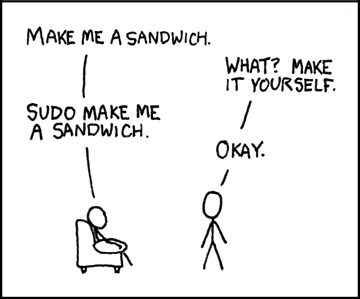
Simply one of the most useful websites I have come across in recent time. It is a resource to find the open source alternatives to commercial software.
 Google announced Chrome for Linux (and Mac today).

A 32-bit operating system is limited to 4 GB of memory ( you can only reference 2 ^ 32 = 4GB ). However, 32-bit Ubuntu is limited to 3 GB. If you are considering between 32-bit and 64-bit Ubuntu and you have more than 3 GB of memory that should be a simple decision.
There is a workaround however if you are still not convinced 64-bit is the way to go - install server kernel as it has support for upto 4 GB. But think about the future when your 4GB will not be enough and you add more memory?
When using inheritance, destructors are called in the reverse order of inheritance. If a base class pointer points to a derived class object, and later we use the delete operator to delete the object, then the derived class destructor is not called. Refer to the code that follows:
#include
class base
{
public:
~base()
{

}
};

class derived : public base
{
public:
~derived()
{

}
};

void main()
{

base *ptr = new derived();
// some code
delete ptr;
}
The result is a memory leak.
Solution to avoid this -
Make the destructor virtual in the base class. A virtual destructor is one that is declared as virtual in the base class.
#include
class base
{
public:
virtual ~base()
{

}
};

class derived : public base
{
public:
~derived()
{

}

};

void main()
{

base *ptr = new derived();
// some code
delete ptr;
}
Does this mean when using virtual functions, it is always a good idea have the destructor virtual as well?
Each ELF file is made up of one ELF header, followed by file data. The file data can include:
readelf is a Unix binary utility that displays information about one or more ELF files.objdump provides a wide range of information about ELF files and other object formats.
rutul@ubuntu:~/test_progs$ gcc hello_world.c
rutul@ubuntu:~/test_progs$ ldd a.out
       linux-gate.so.1 =>  (0xb7ef2000)
       libc.so.6 => /lib/tls/i686/cmov/libc.so.6 (0xb7d80000)
       /lib/ld-linux.so.2 (0xb7ef3000)
rutul@ubuntu:~/test_progs$
rutul@ubuntu:~/test_progs$ readelf -l a.out

Elf file type is EXEC (Executable file)
Entry point 0x8048310
There are 8 program headers, starting at offset 52

Program Headers:
 Type           Offset   VirtAddr   PhysAddr   FileSiz MemSiz  Flg Align
 PHDR           0x000034 0x08048034 0x08048034 0x00100 0x00100 R E 0x4
 INTERP         0x000134 0x08048134 0x08048134 0x00013 0x00013 R   0x1
     [Requesting program interpreter: /lib/ld-linux.so.2]
 LOAD           0x000000 0x08048000 0x08048000 0x004c4 0x004c4 R E 0x1000
 LOAD           0x000f0c 0x08049f0c 0x08049f0c 0x00108 0x00110 RW  0x1000
 DYNAMIC        0x000f20 0x08049f20 0x08049f20 0x000d0 0x000d0 RW  0x4
 NOTE           0x000148 0x08048148 0x08048148 0x00020 0x00020 R   0x4
 GNU_STACK      0x000000 0x00000000 0x00000000 0x00000 0x00000 RW  0x4
 GNU_RELRO      0x000f0c 0x08049f0c 0x08049f0c 0x000f4 0x000f4 R   0x1

Section to Segment mapping:
 Segment Sections...
  00
  01     .interp
  02     .interp .note.ABI-tag .hash .gnu.hash .dynsym .dynstr .gnu.version .gn
u.version_r .rel.dyn .rel.plt .init .plt .text .fini .rodata .eh_frame
  03     .ctors .dtors .jcr .dynamic .got .got.plt .data .bss
  04     .dynamic
  05     .note.ABI-tag
  06
  07     .ctors .dtors .jcr .dynamic .got
rutul@ubuntu:~/test_progs$

#include

int main()
{
 int for_a = 100;
 int for_b = 200;
 int for_test = 300;

 const int* a = &for_a;
 int* const b = &for_b;

 a++; // allowed
 a--;
//    *a = for_test; // not allowed: "assignment of read-only location"

//    b++; // not allowed: "increment of read-only variable"
 *b = for_test; // allowed

 printf("Value of *a = %d, value of *b = %d  \n", *a, *b);

 return 1;
}

# cat /etc/lsb-release
DISTRIB_ID=Ubuntu
DISTRIB_RELEASE=8.04
DISTRIB_CODENAME=hardy
DISTRIB_DESCRIPTION="Ubuntu 8.04.3 LTS"
#cat /etc/redhat-release
$ cat /etc/SuSE-release
openSUSE 11.1 (i586)
VERSION = 11.1

mcelog decodes machine check events (hardware errors) on x86-64 machines running a 64-bit Linux kernel. It should be run regularly as a cron job on any x86-64 Linux system (if it is not in the default packages on your x86-64 distribution, please complain to your distributor). It can also decode machine check panic messages from console logs.I don't have a good example on it´s usage, but on one of my systems, I noticed this in /var/log/mcelog (the cron script is setup to write to /var/log/mcelog in Fedora distributions).


You must post your business plan here on my blog where I expect other people can and will comment on it. I also expect that other people will steal the idea and use it elsewhere. That is the idea. Call this an open source funding environment.


 versus
foo.hOne more reason why I don't consider myself a C++ programmer.
class bar {
public:
int getBar1();
private:
static int bar1;
};
foo.cpp
#include "foo.h"
int bar::bar1;
.....
....
 As I am getting ready for a flight this weekend on Virgin America, I remembered something I read a few months back.